
About People Behind the Progress
As champions of innovation, we know that every breakthrough begins with a person.
A researcher asking a new question. A clinician finding a better way to help a patient. A family member sharing hope. An advocate turning lived experience into action. A colleague reaching across institutions to solve a problem together.
These are the People Behind the Progress.
Join us for the NNDC’s year-end giving campaign, People Behind the Progress: Stories of Innovation, Care and Hope, celebrating the people and ideas that are moving depression and bipolar disorder research, treatment and care forward.
Over the coming weeks, we’ll be sharing stories from across the NNDC Network—highlighting innovative research, meaningful collaborations, advances in clinical care, treatment successes, problem-solving and the people who make this work possible. A new story will be featured each week from now through the end of the year.
People Behind the Progress Stories

“Mayo Clinic had the opportunity to partner with the NNDC as a participating site in the multi-site Bio-K trial. This trial recruited patients suffering with treatment-resistant depression to receive open-label ketamine. While receiving infusions, participants donated blood samples, giving researchers across the NNDC an opportunity to investigate biomarkers that might one day help us better understand and predict treatment response and remission.
However, this trial provided so much more than what can be fully captured in data or seen on paper. Many of the patients who participated had lived for years with debilitating symptoms of depression. Their lives, and the lives of the people who loved them, had been profoundly disrupted by an illness that had not responded adequately to previous treatments. They came to us willing to participate in research, hopeful that it might offer answers not only for themselves but for others living with depression.
Unlike other traditional treatments offered in psychiatry, ketamine can provide a rapid improvement in symptoms, often within a matter of hours to days. As one of the physicians involved in the study, I had the privilege of witnessing those changes firsthand. I remember a participant who arrived visibly burdened by her depression. Just 24 hours after her first infusion, her well-being had shifted entirely. Her affect was brighter. Her speech was faster. Her motor movements were more fluid. Her spouse told us it was the best he had seen her in many years.
Another participant had become so limited by his depression that he was largely confined to his home and unable to participate in family life. As his symptoms improved, he began attending his children’s soccer games again. He could take part in activities with his family. His partner came to us in tears and told us, “This is the person I married.” Time after time, patients have highlighted how this treatment had been life-changing and life-saving, not only for them, but their families as well.
The impact of the Bio-K trial extended well beyond the individual patients who participated. At the time, ketamine infusions for treatment-resistant depression were still considered relatively novel in the field. Through our collaboration with the NNDC, our multidisciplinary team gained invaluable experience providing this emerging treatment in the carefully structured environment of a clinical trial. We learned what to monitor, how to educate and prepare our staff, and how to build processes that could ultimately translate from a research protocol to a clinical ketamine service. That experience helped lay the groundwork for a robust clinical practice at Mayo Clinic, allowing us to offer this treatment to many more patients with treatment-resistant depression. For me, seeing patients and families thrive when they were unable to do so before is among the greatest privileges of my career.”
– Jennifer Vande Voort, MD, Mayo Clinic
About: BIO-K (Biomarkers of Ketamine) was a multicenter, open-label clinical study designed to investigate how IV ketamine works in treatment-resistant depression (TRD) and, importantly, whether biological markers could help predict who responds to treatment. The study included Mayo Clinic, University of Michigan, Johns Hopkins, and Pine Rest, and while the trial is now closed, the findings continue to inform current practices in ketamine treatment for depression.
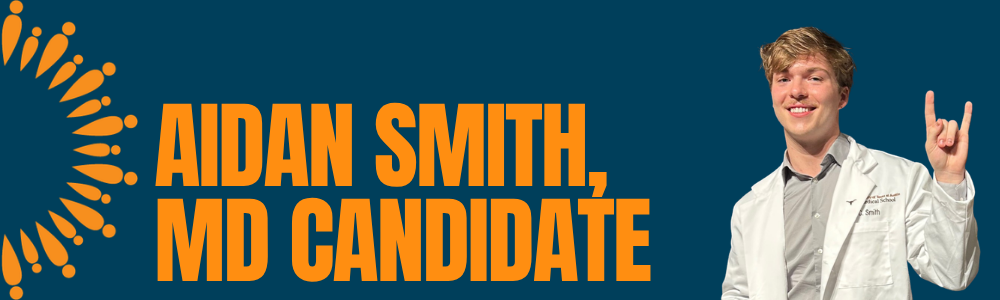
“I’m so thankful to the NNDC for the incredible opportunity to attend the Best Practices Conference. The experience was truly invaluable, and I’m so grateful for the scholarship support that made it possible for me to attend. Without that financial assistance, I would not have been able to participate, and I’m deeply appreciative of the chance to learn from experts and peers in the field.
Since returning, I’ve already been able to apply what I learned to my primary care clerkship, where I primarily work with the HIV-positive population in Austin. The knowledge I gained about mood disorders and patient communication has made me more thoughtful and effective in how I interact with my patients. I’ve found that I’m better able to recognize when mood symptoms may be affecting overall health and to approach those conversations with greater empathy and confidence.
The conference not only strengthened my clinical skills but also deepened my commitment to continuing to grow as a provider who understands the complex relationship between mental and physical health. I left feeling inspired and better prepared to support my patients in a more holistic way.
Thank you again for your generosity and for making this experience possible. I’m truly grateful for the opportunity and for the lasting impact it has had on my medical training and professional development.“
– Aidan Smith, Best Practices for Mood Disorders Travel Award Recipient and MD Candidate with Dell Medical School at the University of Texas at Austin